
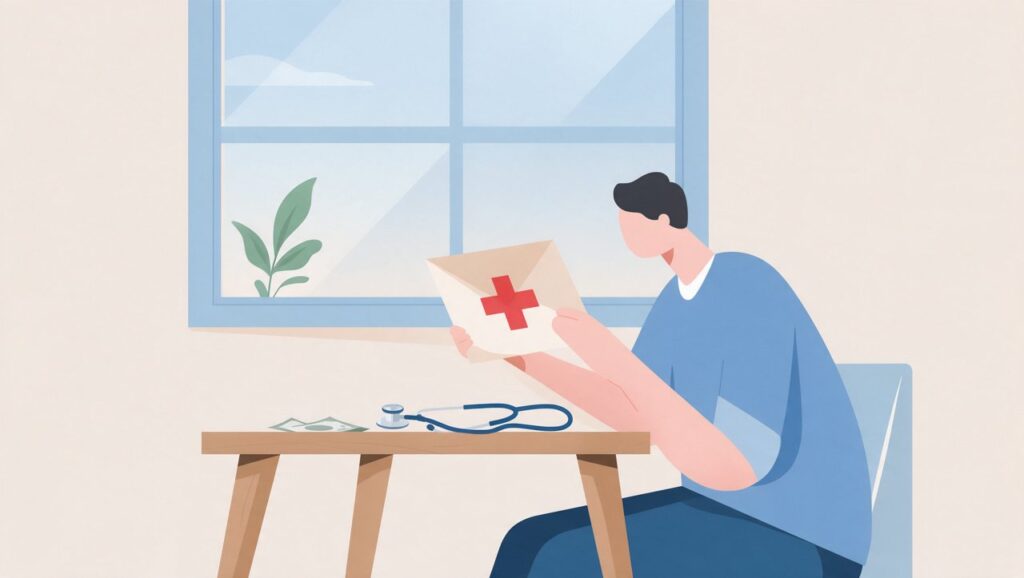
You come home from an urgent care visit for what turned out to be a bad sinus infection. A few weeks later, a white envelope shows up. The bill says you owe $840 after insurance. You check your checking account and the number is a lot smaller than that. Right now it feels like the only options are to drain your savings or ignore it and hope it goes away. Neither sounds good.
The good news is that medical bills are different from most other debts. They are more flexible than a car payment, and there are usually several ways to reduce what you owe or buy yourself time without wrecking your credit. Here is how to work through the stack of bills without losing your mind.
Gather Every Bill and Match It to Your Insurance
Before you pay anything, get organized. Medical billing is messy, and it is common to receive a bill that should have been covered or was already paid. Put every bill, explanation of benefits, and receipt in one folder. For each bill, write down the date of service, the provider name, and the amount owed.
Then look at your insurance company’s explanation of benefits, often called an EOB. The EOB is not a bill, but it tells you what the insurance paid, what they did not pay, and what your responsibility is. Compare that number to the bill. If the bill asks for more than the EOB says you owe, call the billing office and ask why. Sometimes the bill was sent before the insurance payment posted. Sometimes there is a coding error.
A common mistake is paying a bill just because it looks official. Bills can contain duplicate charges, charges for services you did not receive, or charges that should have been written off under the provider’s contract with your insurer. If anything looks off, call the provider’s billing department and ask for an itemized bill. An itemized bill lists every single charge, from the cost of a bandage to the fee for the doctor’s time. Reviewing it line by line is boring, but it is the fastest way to catch errors like being charged for two X-rays when you only had one.
Check If You Qualify for Financial Assistance
Many hospitals and larger clinics have financial assistance programs, sometimes called charity care. These programs can reduce your bill or wipe it out completely based on your income and household size. You do not have to be unemployed or extremely low income to qualify. A family of four with a household income in the low six figures can sometimes still get a discount at certain nonprofit hospitals.
Nonprofit hospitals are required to have a written financial assistance policy and to make it available to patients. For-profit hospitals and private practices are not required to offer help, but many still have hardship programs. The best approach is to search the hospital’s website for “financial assistance” or “charity care” and download the application. If you cannot find it, call the billing office and ask for the application directly.
Be ready to provide proof of income, such as recent pay stubs, tax returns, or a letter from your employer. The application can be tedious, but the payoff is worth it. The key is to apply as soon as possible. Hospitals set application deadlines, often several months after the first bill, and a missed deadline can cost you a discount you would have qualified for.
Negotiate the Price Down Before You Pay
People assume medical prices are fixed. They are not. If you are uninsured, or you went out of network, you may be billed something close to the provider’s full list price, often called the chargemaster rate. That is the highest price on the menu, and it is often negotiable.
Start by researching what a fair price would be. You can use a tool like Healthcare Bluebook to look up typical prices for procedures in your area. If your bill is much higher than the typical amount, use that as leverage. Call the billing office and say something like, “I want to pay this, but I can’t afford $840. I can pay $400 today if you can accept that as payment in full.” The phrase “payment in full” matters because it tells them the negotiation ends there.
Some providers will say no to a discount but will offer a payment plan instead. That leads to the next step. Others will knock off 20 or 30 percent just for asking. The trick is to be polite, persistent, and clear about what you can afford. If the first person cannot help, ask to speak with a supervisor or someone in patient financial services. Do not use a credit card to pay the bill unless you have already negotiated the lowest possible amount and have a plan to pay the card off quickly.
Set Up a Payment Plan That Actually Works for You
If a discount is not available, a payment plan is the next best option. Many hospitals and clinics offer interest-free payment plans over six, twelve, or even twenty-four months. A $900 bill split over twelve months is $75 a month, which is a lot easier to handle than a one-time hit.
When you call to set up a plan, do not accept the first monthly amount they suggest if it is too high. Tell them what you can realistically afford. Many billing offices would rather take $40 a month than send the account to collections. Get the agreement in writing or at least ask for a confirmation email that states the monthly amount, the number of payments, and that no interest or fees will be added.
Avoid putting the bill on a credit card to create your own payment plan. Medical credit cards and regular credit cards charge interest, which makes the bill more expensive.
Understand What Happens If You Don’t Pay
Ignoring a medical bill is rarely a good idea, but the consequences are different from missing a mortgage payment. Medical debt used to hit credit reports quickly, but the major credit bureaus in the United States have added a waiting period before unpaid medical collections appear, and they no longer report paid medical collections or small ones under $500. Those policies can change, so confirm the current rules. The waiting period gives you time to sort things out, but it does not mean the debt goes away.
If a bill goes unpaid long enough, the provider may send it to a collection agency. At that point, the agency can start calling and sending letters. A collection account can eventually appear on your credit report and lower your credit score. That can make it harder to rent an apartment, get a car loan, or qualify for a credit card with decent terms.
The better move is to stay in communication with the billing office. Even a small good-faith payment each month, like $25, shows you are trying. Many providers will keep the account in-house and hold off on collections as long as they see regular payments. If you truly cannot pay anything, tell them that and ask about hardship options or a temporary hold on the account.
Watch Out for Common Billing Mistakes
Medical bills are full of errors, and many people pay more than they should because they never check. The most common mistakes include duplicate charges, charges for canceled services, incorrect insurance information, and upcoding, which is when a provider bills for a more expensive service than the one you received.
Here is a quick way to catch problems:
- Compare the bill to your EOB line by line.
- Look for any service you do not remember receiving.
- Check the date of service and the provider name.
- Watch for charges that appear twice.
- Make sure your insurance information is correct on the bill.
If you find an error, call the billing office and explain what is wrong. Ask them to review the claim and send you a corrected bill. Ask the office to note the dispute on the account and to hold it from collections while they review, and get that in writing if you can. Keep notes on who you talked to, the date, and what they said. This creates a paper trail if the issue comes up again later.
Know Your Rights Under the No Surprises Act
Since 2022, federal law has protected many patients from surprise bills. If you got emergency care, you generally cannot be charged out-of-network rates beyond your normal in-network cost sharing, and the same protection covers some out-of-network providers at an in-network facility. If you are uninsured or pay on your own, providers must give you a good faith estimate of the cost before scheduled care, and you can dispute a bill that comes in far above it. If a bill looks like it breaks these rules, mention the law when you call and ask your insurer or the provider to reprocess it.
Explore Free or Low-Cost Help in Your Area
You do not have to handle this alone. There are nonprofit organizations that help people understand and negotiate medical bills. Some hospitals have patient advocates on staff who can review your bill for errors and help you apply for assistance. Ask the hospital if they have a patient advocate or financial counselor you can meet with for free.
Community health centers and legal aid offices sometimes offer free help with medical debt. If you are on Medicare, the State Health Insurance Assistance Program can help you understand your coverage and appeal denials. These services are staffed by people who look at medical bills every day and know what to ask for.
A word of caution: be careful about paying a company to negotiate your medical bills. Some legitimate advocates charge a flat fee or a percentage of the savings, but there are also scams that take your money and do little or nothing. Before hiring anyone, check with your state attorney general’s office or the Better Business Bureau to see if complaints have been filed. In most cases, you can do the same work yourself with a few phone calls.
Plan Ahead for the Next Bill
Once you get through this bill, take a few steps to make the next one easier. If you have health insurance, review your plan’s deductible, copay, and out-of-pocket maximum so you know what to expect. An out-of-pocket maximum is the most you will pay in a year for covered services. Once you hit that number, the insurance pays for covered care in full. Knowing that number helps you plan.
If you do not have insurance, look into whether you qualify for Medicaid or a subsidized plan through the Health Insurance Marketplace. You can check your options at HealthCare.gov. Even a high-deductible plan can protect you from a $50,000 hospital bill after a bad accident.
Also consider setting aside a small amount each month in a separate savings account for medical costs. Even $50 a month adds up to $600 a year, which can cover an urgent care visit or a prescription. If your employer offers a health savings account or flexible spending account, those let you set aside pre-tax money for medical expenses. The details vary by employer, so check your benefits booklet or ask your HR department how they work.
Quick Checklist for Handling a Bill You Can’t Afford
When a big medical bill lands in your mailbox, work through these steps in order. You do not have to do everything in one day.
- Find the bill, your insurance EOB, and any receipts. Put them in one folder.
- Compare the bill to the EOB. Look for charges that do not match.
- Call the billing office if anything looks wrong. Ask for an itemized bill.
- Search the provider’s website for financial assistance or charity care. Apply if you think you might qualify.
- Look up typical prices for the service so you know if the bill is inflated.
- Call the billing office and ask for a discount. Offer a specific amount you can pay today.
- If they will not discount, ask for an interest-free payment plan you can afford.
- Get any agreement in writing before you send money.
- Keep paying something each month, even if it is small, to avoid collections.
- If you feel overwhelmed, ask for a patient advocate or free local help.
The most important thing is to act. A medical bill is a negotiation, not a final judgment. Call, ask questions, and push back. You will often find that the number on the first bill is not the number you actually have to pay.