You know the feeling. It is Wednesday evening, you are tired, and the fridge is full of random ingredients but somehow there is nothing to eat. You end up ordering takeout, spending thirty bucks, and throwing away a bag of wilted spinach on Sunday. It happens to everyone, but it does not have to be your weekly routine. The fix is not extreme couponing or eating rice and beans for every meal. It is a simple habit called meal planning.
Meal planning sounds boring, but it is actually the fastest way to cut your grocery bill without feeling deprived. When you know what you are cooking before you walk into the store, you stop buying things on impulse and you stop wasting food. This guide walks you through a realistic week by week approach, including what to cook, how to shop, and how to avoid the mistakes that make people quit.
Start With a Realistic Pantry Audit
Before you write a single meal idea, take stock of what you already own. Most American kitchens are full of half used bags of rice, a can of black beans from three months ago, and a lonely box of pasta. If you ignore these items, you will buy duplicates and your grocery bill will stay high.
Pull everything out of your pantry, your freezer, and your fridge door. Group items by type: grains, canned goods, proteins, frozen vegetables, sauces, and snacks. You do not need a fancy spreadsheet. A piece of paper or a notes app on your phone works fine. Write down anything that is close to expiring or that you have in large quantities.
This step matters because meal planning works best when you build meals around what you have. If you find two cans of chickpeas and a jar of curry paste, you already have the base for a cheap dinner. If you find a bag of frozen chicken thighs, that is your protein for two nights. Shopping from your own kitchen first is like giving yourself a discount before you even leave the house.
Common mistake: people skip the audit and start by browsing recipes online. That leads to a list full of new ingredients and a cart that costs way more than expected. Avoid that. Let your pantry set the menu, not the other way around.
Pick Five Dinners, Not Seven
One of the biggest beginner errors is planning a different complicated recipe for every single night. Life gets busy. Someone works late, a kid has practice, or you simply do not feel like cooking. When that happens, a strict seven night plan falls apart and you waste food.
Instead, plan five dinners for the week. That leaves one night for leftovers and one night for something flexible like breakfast for dinner, a frozen pizza, or a simple pasta with butter and parmesan. If you live alone, three or four planned dinners might be enough because you will eat leftovers more often.
For each dinner, think in terms of a simple formula: a protein, a starch or grain, and a vegetable or fruit. For example, baked chicken thighs, rice, and roasted broccoli. Ground turkey tacos with corn tortillas and a side of cabbage slaw. Lentil soup with bread and a simple green salad. You do not need to be a chef. You need repeatable meals that use cheap, familiar ingredients.
Write the five dinners on a piece of paper and stick it to the fridge. That visible list is your anchor. When someone asks “What’s for dinner?” you already have an answer. That alone reduces the urge to order delivery.
Build a Price Aware Grocery List
Now that you know your five dinners, write your grocery list by category: produce, meat and seafood, dairy and eggs, pantry, frozen, and other. Organizing the list this way makes the shopping trip faster and reduces the chance you wander down the snack aisle.
Before you go, check the weekly ad for your usual store. Many grocery chains, including Kroger and Aldi, publish weekly ads online or in a store app. You do not need to clip physical coupons. Just glance at what is on sale in the meat and produce sections. If chicken breasts are cheaper than ground beef this week, use chicken in two meals instead of one. If bell peppers are expensive, swap in cabbage or carrots. Flexibility is the whole game.
A simple comparison habit helps too. Look at the price per ounce or per pound on the shelf tag, not just the total price. A big bag of rice costs more upfront but is much cheaper per serving than a box of instant rice. The same goes for oats, dried beans, and family packs of meat. Buy the larger size only if you will actually use it before it goes bad. If you live alone, a giant tub of spinach might not make sense, but a big bag of frozen spinach will.
Use a Rotating Weekly Template
You do not need a brand new set of five meals every single week. In fact, repeating a loose template makes planning faster and cheaper. Here is a simple structure that works for many households:
- Monday: Pasta night. Spaghetti with marinara, pasta with white beans and garlic, or mac and cheese with frozen peas.
- Tuesday: Taco or burrito bowl night. Ground meat, beans, rice, salsa, and whatever vegetables you have.
- Wednesday: Sheet pan dinner. Chicken sausage or tofu, potatoes, and a green vegetable roasted on one pan.
- Thursday: Stir fry or skillet meal. Rice or noodles with a protein and a bag of frozen stir fry vegetables.
- Friday: Homemade pizza or burgers. Something fun but still cheaper than eating out.
Within that template, you swap ingredients based on sales and what is in your pantry. Monday is always pasta, but the sauce and add ins change. Tuesday is always tacos, but the protein and toppings change. This gives you variety without decision fatigue.
Common mistake: trying to cook a completely new cuisine every week. That is expensive because you buy specialty sauces and spices you use once. A rotating template keeps your pantry small and your shopping list predictable.
Cook Once, Eat Twice
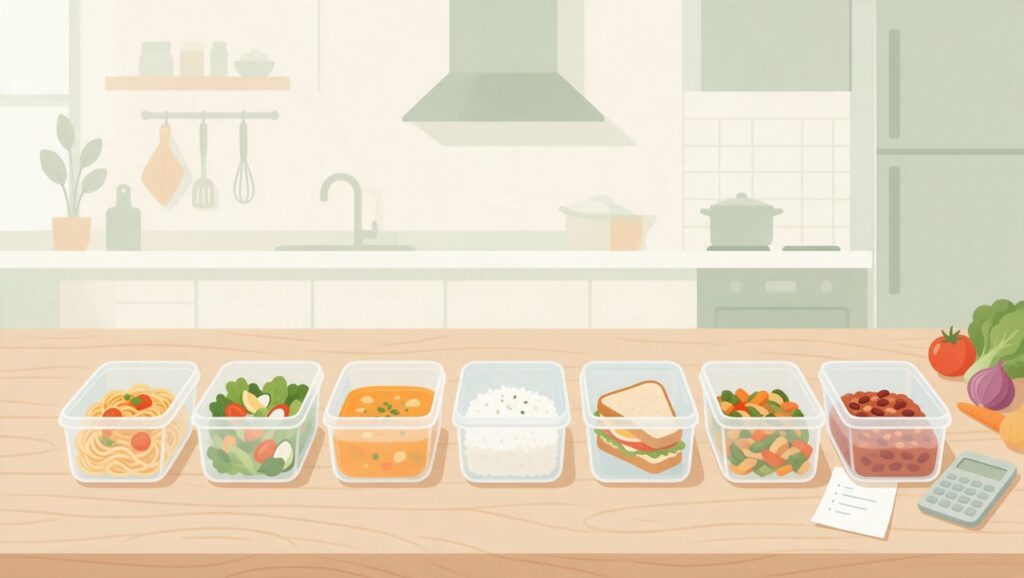
Cooking every single night is exhausting, and exhaustion leads to expensive convenience food. The solution is to cook components in batches, not necessarily full meals. You do not have to spend your whole Sunday in the kitchen. Just double whatever you are already making.
If you are roasting vegetables for tonight’s dinner, roast two pans. Use the second pan in tomorrow’s grain bowl or scrambled eggs. If you are browning ground beef for tacos, brown two pounds and freeze half for next week. If you are making rice, make a big pot. Leftover rice becomes fried rice, a burrito filling, or a quick side for a soup.
This habit works because it creates a stash of “almost ready” food in your fridge and freezer. A container of cooked chicken, a jar of washed lettuce, and a batch of cooked quinoa can be combined into five different lunches without any real cooking. That is how you stop the noon panic that leads to a twelve dollar sandwich at the deli.
Plan for Lunches and Snacks, Not Just Dinner
Dinner is the biggest meal, but lunches and snacks quietly drain your budget. A coffee and a pastry on the way to work, a fast food combo at lunch, a granola bar from the vending machine. None of these feel like a big deal in the moment, but together they can add up to more than your entire grocery bill.
When you write your five dinners, also write down a simple lunch plan. It does not have to be fancy. Leftovers from dinner are the easiest option. Cook one extra portion the night before and pack it while you are cleaning the kitchen. If you do not like leftovers, plan for a rotating set of cheap lunches: peanut butter and jelly on whole wheat bread, a can of soup with an apple, a bean and cheese quesadilla, or a big salad with a hard boiled egg.
For snacks, buy a few inexpensive staples in larger packages instead of individual snack packs. A big tub of plain yogurt, a bag of apples, a jar of peanut butter, and a box of crackers cost less per serving than single serve cups and bags. Portion them out at home if you need grab and go options. A small reusable container works just as well as a plastic snack pack and costs almost nothing over time.
Shop Your List and Use a Timer
The grocery store is designed to make you spend more. End caps, eye level displays, and the smell of the bakery are all there to tempt you. You cannot avoid all of it, but you can use a few simple defenses.
First, never shop hungry. This is old advice, but it works. A hungry shopper buys chips, frozen appetizers, and a rotisserie chicken that was not on the list. Eat a piece of toast or a banana before you go.
Second, stick to the perimeter of the store for most of your items. Produce, meat, dairy, and eggs are usually around the outside edges. The middle aisles have the pantry staples you need, but they also have the most processed and impulse driven products. Go into the middle aisles only for the specific items on your list.
Third, set a timer on your phone for your shopping trip. Give yourself thirty minutes. When the timer goes off, head to checkout. A longer trip means more time to wander and more unplanned purchases. If you use a store’s app for pickup or delivery, the timer trick still applies to your online browsing. Set a limit and move on.
Store Food So It Actually Lasts
Buying fresh produce is great, but it only saves money if you eat it. Households throw away a lot of food, and that waste is money in the trash. A few storage habits can stretch your groceries much further.
Wash and dry lettuce and herbs as soon as you get home, then wrap them in a clean kitchen towel inside a plastic bag or container. They will stay crisp for a week or more. Store carrots and celery in water in the fridge. Keep potatoes and onions in a cool, dark place, not next to each other. Tomatoes and bananas should stay on the counter, not in the fridge.
For meat, divide family packs into smaller portions before freezing. A pound of ground beef in a freezer bag will thaw faster and cook more evenly than a three pound block. Label everything with the date and what it is. A mystery package of frozen something is not helpful on a busy Tuesday.
For pantry items, use clear containers or at least keep like items together. If you can see the rice and beans, you are more likely to use them. Rotate older items to the front. The goal is to create a kitchen where food is visible and easy to grab, not hidden and forgotten.
Roll It Out Over Four Weeks
You do not have to do everything above in your first week. Building the habit in stages is easier to stick with, and it shows you where your own money leaks.
- Week 1: Do the pantry audit and plan only three dinners. Shop with a list and see how much of the food you actually use.
- Week 2: Move up to five dinners and add the weekly ad check. Write down what you spent next to what you spent in a typical week before.
- Week 3: Add the lunch and snack plan and one double batch, such as a big pot of rice or two pans of roasted vegetables.
- Week 4: Use your rotating template, shop with a timer, and compare your total to week one. Keep what worked and drop what felt like a chore.
By week four most people have a handful of go-to meals and a feel for what their store charges. Your own numbers will tell you more than any average, so write down your weekly total each time.
Adjust When Life Happens
No week goes exactly as planned. Someone gets sick, a meeting runs late, or you simply do not want to eat the soup you planned. That is normal. The point of meal planning is not perfection. The point is to have a system that saves you money most of the time.
When a meal does not happen, do not throw the ingredients away. Move them to the next week. If you bought chicken for Wednesday but ordered pizza instead, cook the chicken on Thursday or freeze it. If the vegetables are wilting, toss them into a soup or a frittata. A flexible plan absorbs surprises without breaking.
If you have a week where everything falls apart, just restart the next week. Do not decide that meal planning “does not work” because one week was messy. The savings add up over months, not days. Even planning four dinners a week instead of seven will cut your food waste and your bill.
Your Quick Meal Planning Checklist
Here is a simple checklist to use before every grocery trip. Keep it on your phone or print it out.
- Check the fridge, freezer, and pantry. Write down what needs to be used.
- Pick five dinners using a rotating template and your pantry items.
- Add one leftover night and one flexible night to the week.
- Write a grocery list organized by store section.
- Check the weekly ad for your usual store and swap in sale items.
- Plan a simple lunch and two or three snacks for the week.
- Shop with a full stomach and a timer.
- Wash and store produce the same day you buy it.
- Cook a double batch of one component, like rice or roasted vegetables.
- Move any uneaten meals to the next week instead of throwing them out.
Meal planning is not about being perfect or spending your whole weekend in the kitchen. It is about making a few small decisions before you are tired and hungry so that you do not make expensive ones later. Start with one week, use what you have, and let the savings build.